Retaining Walls That Create Real Patio Space
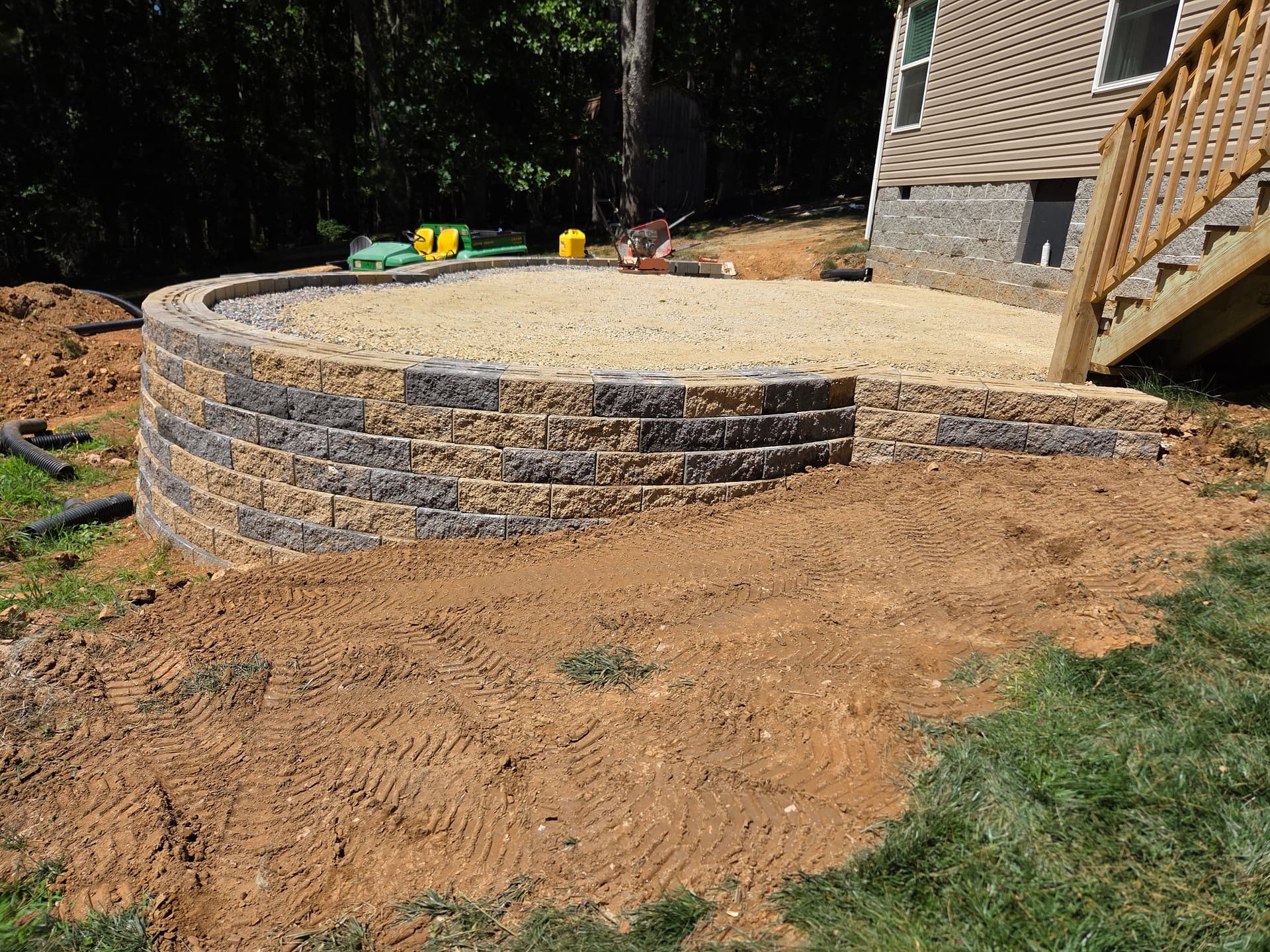
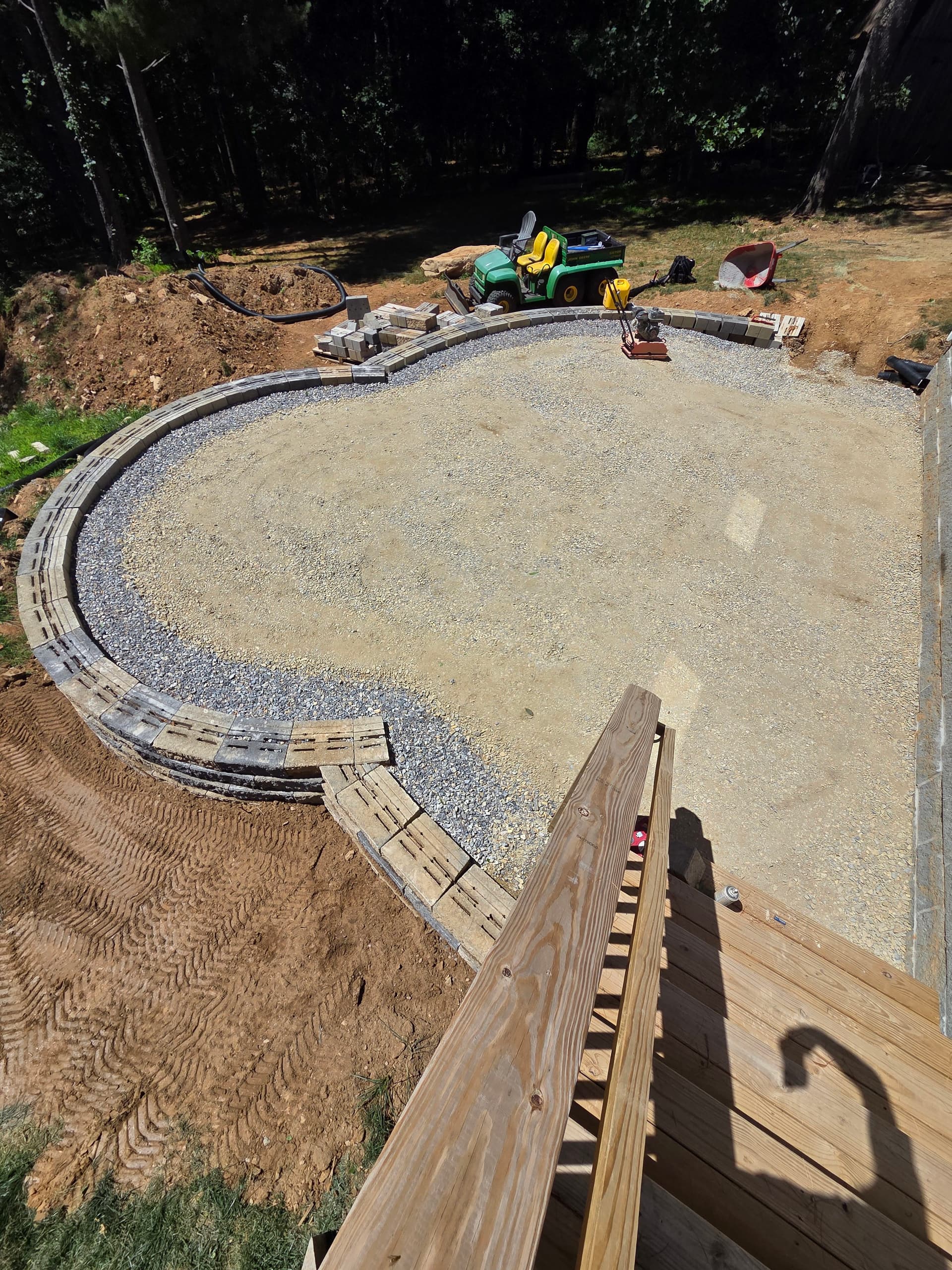
Here's something a lot of homeowners don't realize - a retaining wall isn't just about holding soil back. Done right, it actually creates usable space where there wasn't any before. That's exactly what we're working with on this one. The slope on this backyard would have severely limited what was possible for a patio. So we built the walls first, and now there's a solid, level platform ready to become a real outdoor living area.
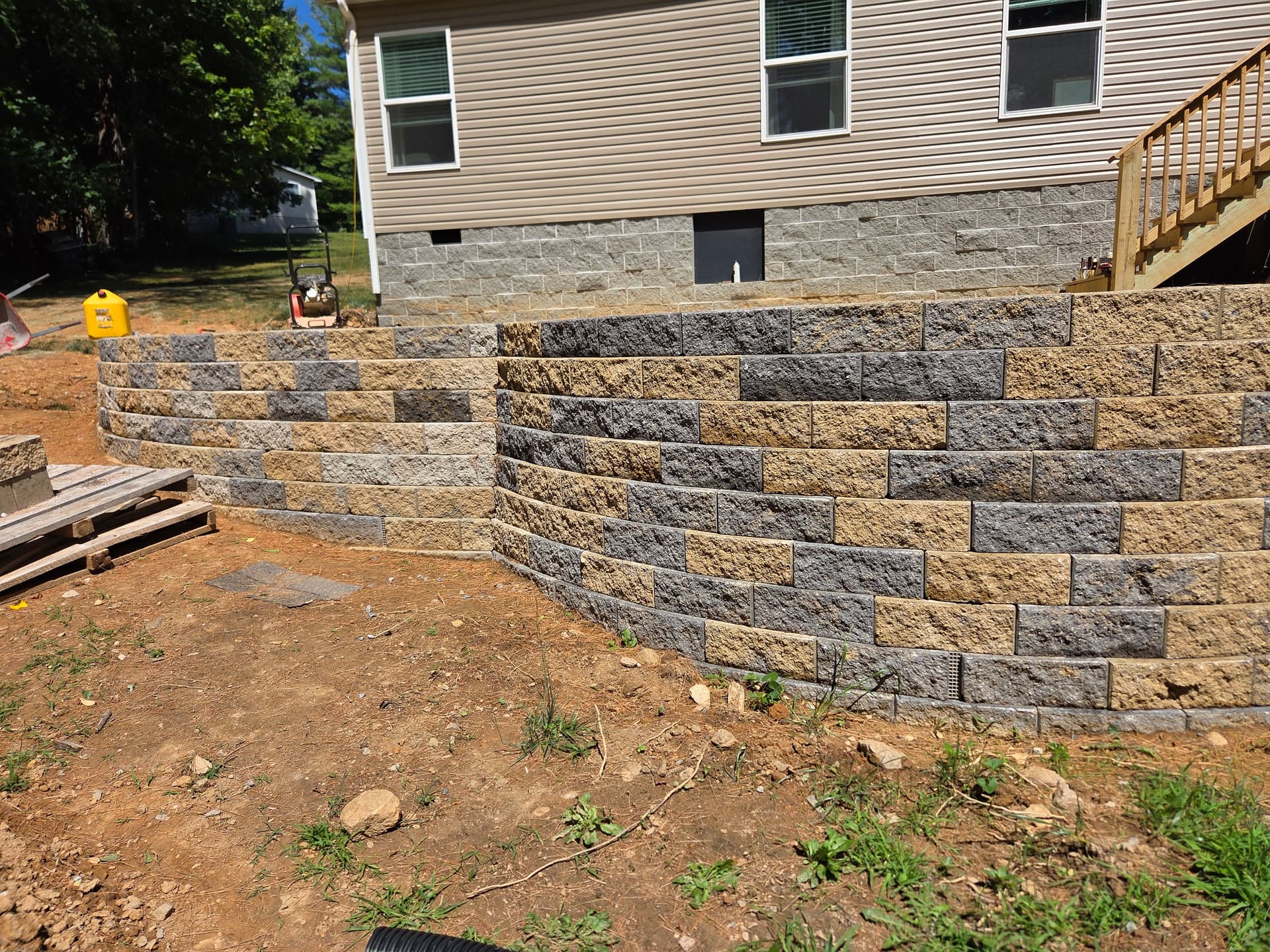
The curved wall design here is doing a lot of heavy lifting - both literally and visually. Wrapping the block in a smooth arc takes more time and precision than a straight run, but the payoff is a finished look that feels intentional and clean. We're using a mix of tan and charcoal block, and the color variation gives the wall a natural, layered look rather than something flat and uniform.
What we're showing here is the mid-point of the build. The gravel base is down and compacted inside the wall, which is a critical step that often gets rushed or skipped. That base is what keeps everything stable long-term - it's not just filler. The drainage pipe running along the perimeter is another piece of this that most people don't see, but it's what keeps water from building up behind the wall over time.
There's also a second, taller wall running along the back of the house. That one is handling the grade change right up against the foundation - a spot that takes some real planning to get right. Both walls need to work together structurally and visually, and that's something you only get right with proper design upfront. Stay tuned - the finished patio surface is next, and this one is going to look great.